
WASHINGTON — The first thing that strikes you when talking to Austin Cohen is his presence. At 14, most of us are awkward and self-conscious, either withdrawing in our shyness or brashly overcompensating for it. It’s even rare to encounter an adult so immediately straightforward and honest — who looks you in the eye without anxiety while discussing their hopes, their dreams and their half-missing leg.
Let鈥檚 back up. A year ago, Austin was a pretty normal eighth grader, an athletic kid who began to come into his own as he discovered success on the football field. He emerged as the starting running back on his eighth-grade team and looked forward to playing in high school at Gaithersburg, Maryland鈥檚 Quince Orchard.
One day last winter, he started feeling a pain in his leg. Austin鈥檚 father, Scott, was concerned when his son mentioned it — his son wasn鈥檛 normally one to complain — but not overly so. Scott chalked it up to growing pains at first, but when the pain didn鈥檛 subside within a week, they went to get help. An osteopathic doctor figured Austin’s hips were out of alignment. The prescribed remedy: stretch it, ice it, go home.
But the pain persisted. Scott took Austin to another doctor for a second opinion. They did an X-ray. Something was off. Not wanting to worry his wife and Austin鈥檚 mom, Miriam, Scott tried to keep the news to himself until they could get more information. His efforts were in vain.
鈥淪o my phone rings at work and I see I have a voicemail,鈥� Miriam recalls. 鈥淎nd I call my pediatrician back, and they told me that Austin was referred to an oncologist. And I said, 鈥楴o, no, you鈥檙e mistaken, he was referred to an orthopedist.鈥欌��
She asked the office to confirm Austin鈥檚 birth date, thinking they must have mixed his file up with another patient. Surely her athletic, healthy teenage son wasn鈥檛 going to see an oncologist. Oncology means cancer.
Cancer was nothing new to the Cohens — it had plagued Miriam鈥檚 father, Mark, at several points in his life. He succumbed to his last bout of throat cancer in December 2013, just a few months before the family was confronted with Austin鈥檚 developing illness.
That illness turned out to be an osteosarcoma, or bone cancer, a condition that affects only a few hundred people per year in the United States, many of them children. It鈥檚 so rare you simply couldn鈥檛 imagine it ever happening to your kid, even if you knew what it was.
鈥淚t鈥檚 the worst thing in your life,鈥� says Miriam. 鈥淭hat鈥檚 all I can say.鈥�
The night before the biopsy, Austin came into his parents鈥� bedroom feeling ill. He passed out and collapsed. After the diagnosis, but before the surgery, Austin’s leg had weakened to the point where it gave out and broke underneath him.
By the time they got him ready for surgery, the area around his knee had swollen to the size of a cantaloupe. But the decision of how to remove the mass was not a simple one. Under the duress and stress of coping with the immediate illness, there was the matter of thinking about the future, of how a still-growing, active boy was going to live the rest of his life without a normally operating leg.
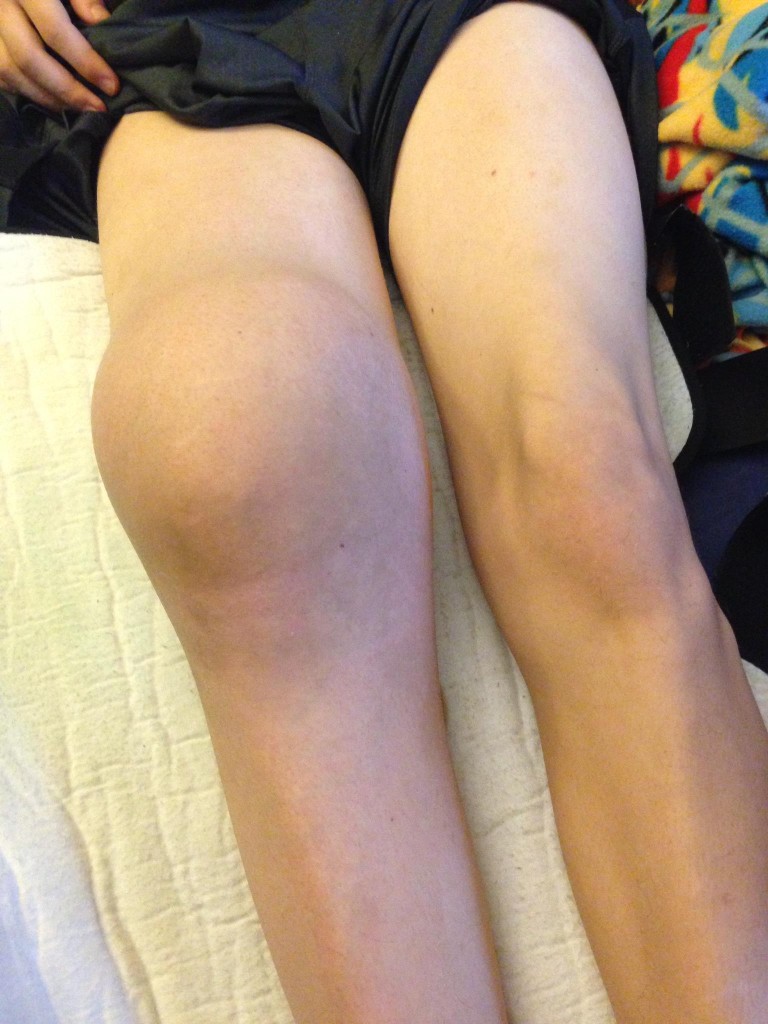
There were two traditional options, neither of them pretty. Austin could undergo a limb salvage, where the tumor is removed and a titanium bone is put in place. It is a heavy-duty surgery, and often needs to be repeated in the future as bone structure changes and adjusts.
Or he could have his leg amputated above the knee.
Not content with either scenario, the Cohens kept looking. They were introduced to a radical surgery called rotationplasty. It sounds insane at first, especially to the squeamish.
鈥淵ou鈥檙e cutting out literally everything,鈥� explains Dr. Carol Morris, orthopedic surgeon at Johns Hopkins, and she isn鈥檛 exaggerating. 鈥淔rom the middle of the thigh to the middle of the shin bone, including all the skin, all the muscle, all the bone, the entire joint. But you鈥檙e leaving the nerves and the blood vessels down to the foot.鈥�
Then comes the part that defies logic. Over the course of the six- to eight-hour surgery, the ankle and foot are turned 180 degrees and attached above the knee joint, nerves and blood vessels intact. The ankle becomes the new knee — heel out, toes up, pointed underneath. Visually, it laughs in the face of conventional wisdom, and the brain struggles to comprehend how it could possibly be beneficial, until you see it work.
Morris understands. 鈥淭o tell a parent 鈥業鈥檓 going to turn your child鈥檚 leg backwards鈥� is daunting, at best,鈥� she says.
Take all the awkwardness you remember from being 14, a freshman in high school, and imagine trying to survive the social gauntlet with half your leg missing and your foot attached backwards. Oh — and try doing it without your hair, lost long ago in the 20-some-odd rounds of chemotherapy.
鈥淎t first the rotationplasty sounded really crazy,鈥� says Austin. 鈥淚t just sounded so weird to me. Like, having my foot be backwards? I didn鈥檛 really want to get that.鈥�
But in spite of the circumstances, and despite his young age, Austin was able to see the long view. He couldn鈥檛 imagine a life without physical activity, one that the limb salvage would make nearly impossible. He had to be able to run again, to jump again. To be a kid again.
鈥淗e really was able to, in a way that I鈥檝e not seen with other kids his age, look towards the future,鈥� says Dr. Morris. 鈥淚 think other patients, teenage boys, would say 鈥業 don鈥檛 want a surgery that鈥檚 going to make me look different.鈥欌��
While both Miriam and Scott also believed the rotationplasty would give their son his best chance at a normal life, they left the final say to Austin. Independently, he came to the same conclusion.
鈥淭hroughout this whole treatment, he has been more of an adult than a child,鈥� says Miriam. 鈥淗e鈥檒l be the first one to tell you he came to this decision on his own.鈥�
Of course, simply deciding on the best course of action was only the beginning. Life doesn鈥檛 stop just because your life takes an unexpected turn. For the Cohens, on top of taking care of Austin there was still the daily grind of work, not to mention the responsibility of caring for his younger sister, Courtney. With Miriam managing Austin鈥檚 care and Scott doing his best to juggle the rest, the community came together to support the family in a way the Cohens never expected.
Friends held a buzz-cutting party and shaved their heads in solidarity. Numerous fundraisers were set up to help with medical expenses. Three nights a week, families would cook dinner for the Cohens and deliver it to their house.
鈥淲e had a lot of friends in the community, that we knew and that we didn鈥檛 know, and I felt like they really put their arms around our house and just held us tight,鈥� says Miriam.
Even as everyone made Austin the center of their love and attention, he remained cognizant of the efforts made not only on his behalf, but for his family. He remembered all of the little things — the one nurse with the British accent, who stayed up with him for two hours to make sure he was able to swallow medication when his throat was sore and swollen. The nice things they did not only for him, but for his mom, making her as comfortable as possible in her unchosen home away from home.
Meanwhile, the Quince Orchard football team did their part to make sure Austin didn鈥檛 lose contact with his teammates. Even though he had yet to even become a part of the football team, Austin was embraced and given the position of team photographer for JV, patrolling the sidelines on crutches in his jersey on game day. He was even granted the opportunity to shoot some of the varsity games. Austin grabbed his new responsibility and ran with it, attending every game he could, when not at the hospital.
For Miriam, the transition was harder. She didn鈥檛 want to go sit in the stands with the other parents and face the inevitable questions about why her son was on the sideline while his friends played. But Austin dragged her along, and the experience was eye-opening, in terms of how she viewed both her community and her son.
鈥淭he one thought that came to me was so proud of him I was that he wasn鈥檛 upset about not playing,鈥� she recalls. 鈥淭hat was another time he taught me something. …聽It鈥檚 funny when your kids teach you, right?鈥�
At the end of every home game he attends, Austin lays down on the QO logo in the middle of the football field, staring up at the night sky, waiting for the day he will be able to step off the sidelines and play again. That dream may seem far-fetched, given his circumstances, but Austin鈥檚 doctors believe he can make a full recovery and play sports at the college level.
鈥淵ou can do anything on it,鈥� says Morris. 鈥淵ou can play varsity sports; you can run a marathon. The worst thing that happens is you break your prosthetic leg. Then you go and you get a new prosthetic leg.鈥�
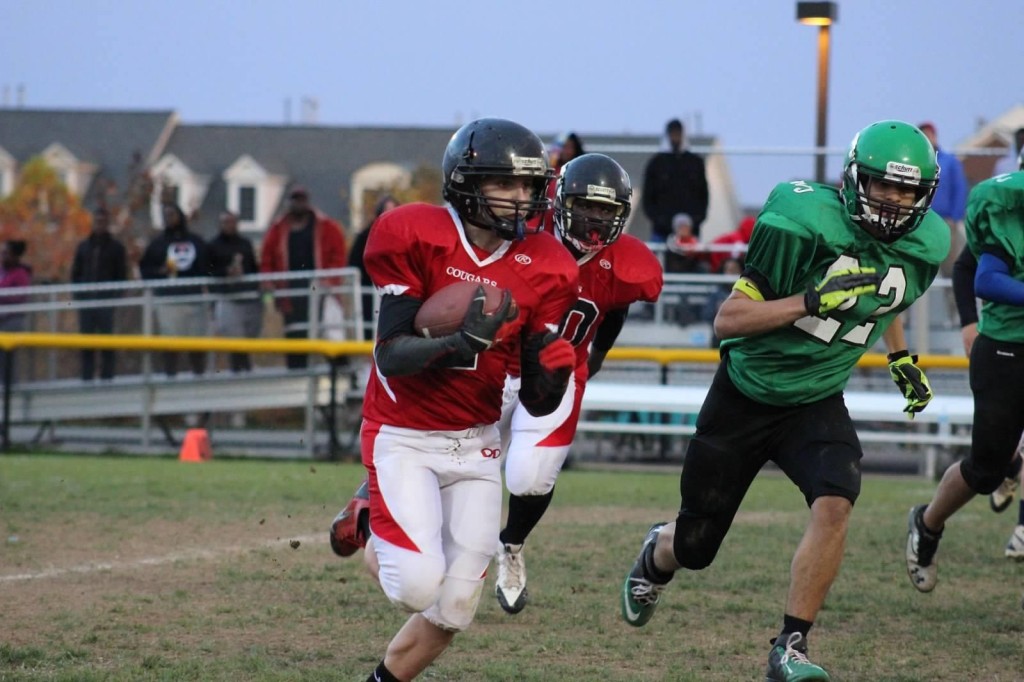
Dr. Holly J. Meany, who is supervising Austin鈥檚 care at Children鈥檚 National Medical Center, says cases like Austin鈥檚 have about a 70 to 75 percent cure rate, as long as the disease was localized, as his was. And she has already seen great progress since his rotationplasty, the first such surgery she can remember at Children鈥檚.
鈥淗e鈥檚 already showing how well he鈥檚 adjusted to the surgery and his new prosthesis,鈥� says Meany.
Of course, there鈥檚 always the chance the cancer could come back, or that the surgery and chemotherapy did not catch everything. Austin will have scans every three months for the first couple years to check, then every six months for the first five years.
As the healing process began, Scott started an email listserv for friends and family who wanted updates on Austin鈥檚 progress, not knowing what the response would be. More than 150 people signed up.
鈥淔or me, it was a way to keep people informed,鈥� he says. 鈥淏ut it was also cathartic.鈥�
The biggest emotional purge came in early December, when Scott was able to send out the news he has been hoping for since this entire ordeal began. There was no need to dress it up with 10-dollar words or long explanations. When you鈥檝e stared your worst fears in the face and survived, you don鈥檛 worry about colorful language.
MRI: clean. Bone scan: clean. X-ray: clean. Peace out.
It doesn鈥檛 mean Austin鈥檚 totally out of the woods, but does mean he can start looking forward. By his last round of chemo, he already knows the process: the urine test. The blood pressure measurements every 15 minutes for the first hour. He鈥檚 done talking about that. He wants to talk about what鈥檚 next.
He wants to go to Japan. Get better at photography. Finish high school. Go to college. But he鈥檚 got even bigger physical goals.
鈥淚鈥檇 like to run a marathon with my prosthetic leg,鈥� he says.
Of course, Austin knows exactly what that challenge means, and how long and arduous the path in front of him is.
鈥淚 have to learn how to run, and walk without crutches first.鈥�
And he also wants to return to football, to his friends and teammates. They鈥檝e been his family away from his family throughout this process, and he can鈥檛 imagine being anywhere other than on the field next year.
鈥淏asically, the whole entire school knows about me wanting to play football next year,鈥� he laughs. 鈥淓ven if I can鈥檛 get that much playing time, still, just to be on the team with all my friends and all the guys, it鈥檒l be great.鈥�
It鈥檚 that upbeat approach that makes Austin so magnetic, that draws such praise from his family and his doctors in handling an unimaginable challenge.
鈥淚f I didn鈥檛 have a positive attitude, they would think there is something wrong,鈥� he says. 鈥淩eally, there鈥檚 nothing wrong. I just have kind of a limp.鈥�
Special thanks to Lindsay Simpson and Brandon Mowry from Monumental Sports for their work on this story.
Follow and on Twitter and .


